How game developers can generate sustainable ad revenue without compromising performance, immersion, or player retention.
Every game developer faces the same tension: monetizing a game without damaging the experience players came for.
Premium pricing limits reach. In-app purchases can distort game design. Interstitial ads generate revenue but harm retention and frustrate players. Rewarded video works, but still interrupts gameplay, and often for 30 seconds.
Intrinsic in-game advertising introduces a different monetization layer. Ads become part of the game world itself rather than obstacles between the player and gameplay.
This guide explains how intrinsic in-game advertising works, what revenue to expect, how integration is handled, and how developers preserve player experience while monetizing at scale.
Monetization models compared
Before focusing on intrinsic ads, it is important to understand how they compare to other monetization approaches.
| Monetization method | Player impact | Revenue role | Implementation |
|---|---|---|---|
| Premium pricing | None | One-time | Simple |
| In-app purchases | Variable | High, whale-driven | Medium |
| Subscriptions | Low | Recurring | Medium |
| Rewarded video | Medium | High-intent peak monetization | Simple SDK |
| Interstitial ads | High | Medium | Simple SDK |
| Intrinsic ads | Low | Always-on baseline revenue | SDK plus environmental surfaces |
Intrinsic ads are rarely a replacement for existing monetization. They function best as incremental revenue, layered alongside IAP and rewarded video without cannibalization.
What are intrinsic in-game ads?
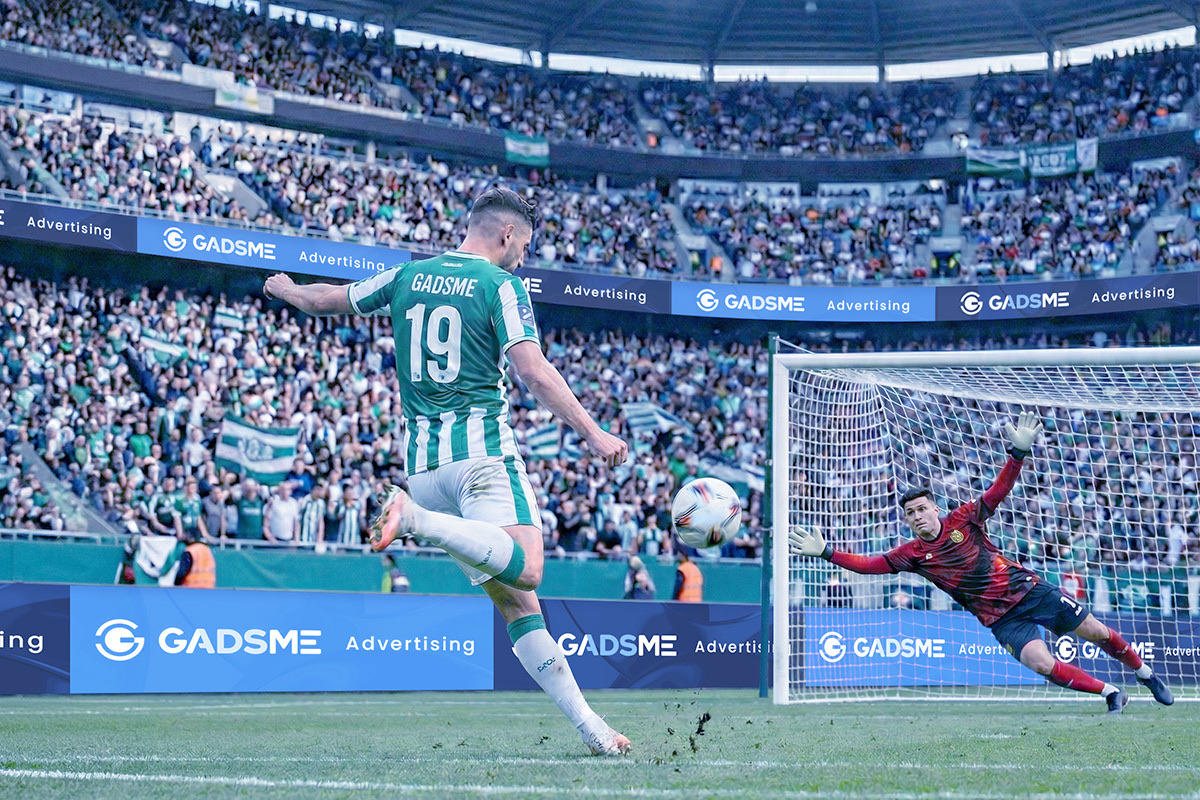
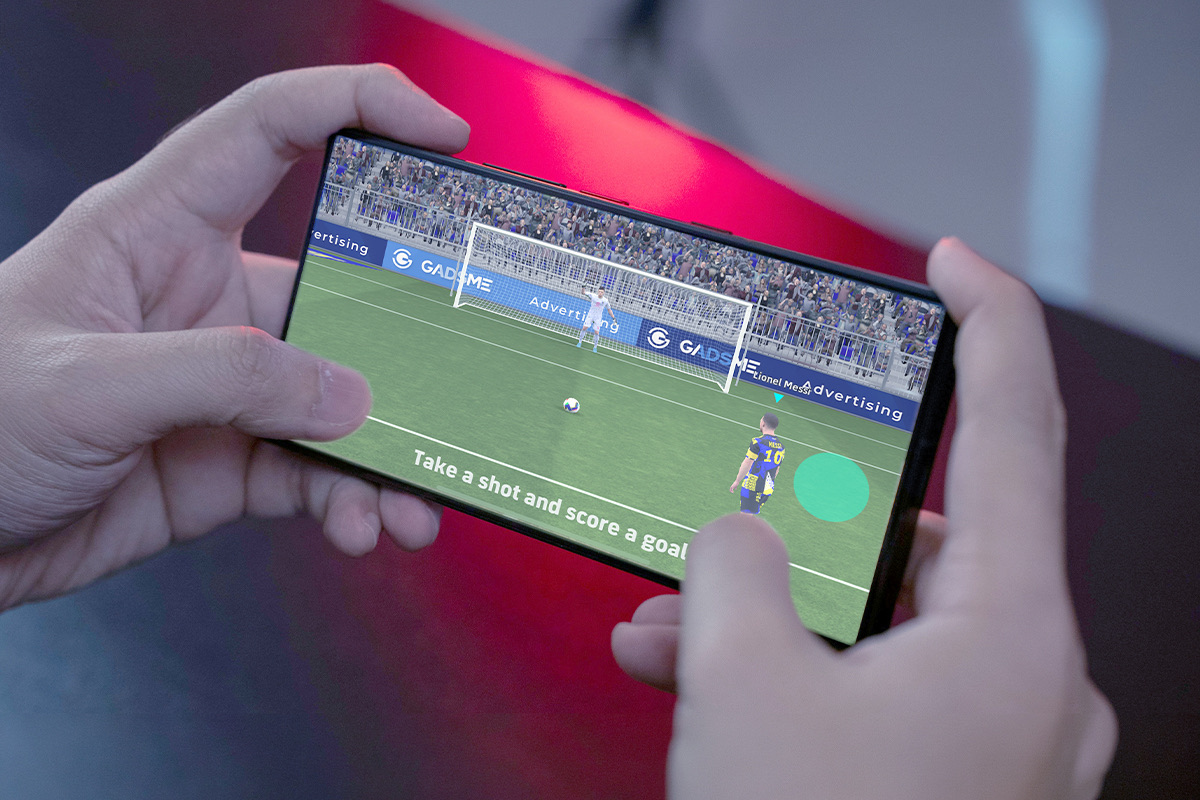
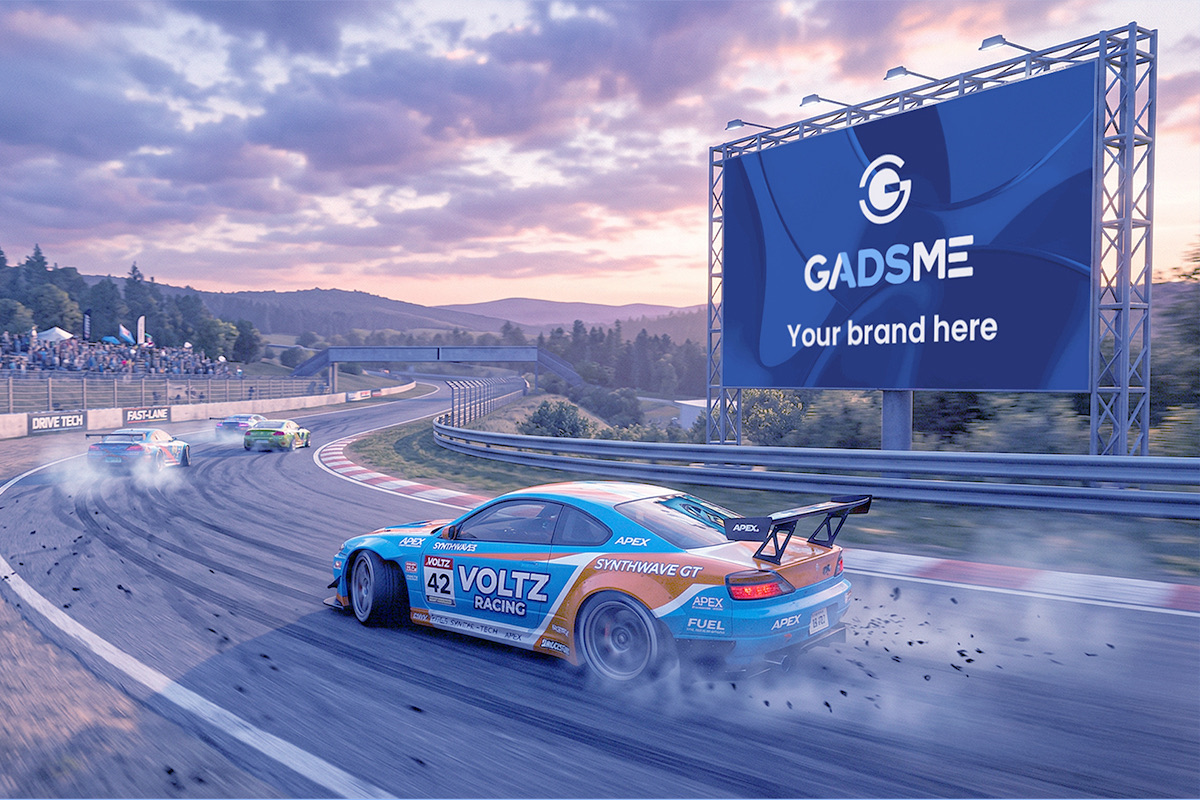
Intrinsic ads are advertising placements rendered directly inside the game environment, on surfaces where advertising naturally exists:
- trackside billboards in racing games
- stadium signage in sports titles
- posters and storefronts in city simulations
- digital displays in futuristic or sci-fi settings
These placements behave like native game assets. They follow lighting, perspective, camera movement, and scene occlusion. Ads are delivered dynamically, allowing real-time campaign updates without shipping a new game build. See what is in-game advertising for the wider format landscape.
Why players accept intrinsic ads
Player acceptance is driven by non-interruption.
A billboard passed during gameplay does not pause action. A stadium banner does not block controls. Advertising remains peripheral, not obstructive.
Research consistently shows that a large majority of players do not dislike ads when implemented as intrinsic placements. In many contexts, advertising even increases realism rather than detracting from immersion.
Revenue potential and key drivers
Intrinsic ad revenue depends on several variables.
Primary revenue drivers
- Daily active users. Revenue scales with audience size.
- Session length. Longer play sessions generate more exposure.
- Placement density. Balance visibility without clutter.
- Game genre. Sports, racing, simulation, and open-world titles monetize most naturally.
- Geography. Western markets typically deliver higher CPMs.
CPM expectations
CPMs generally range from single digits to low double digits, depending on geography, demand, and inventory quality. While lower than rewarded video CPMs, intrinsic ads compensate through continuous exposure.
Incremental monetization, not trade-offs
Intrinsic ads generate revenue without forcing monetization choices. Players can make in-app purchases, watch rewarded videos, and see intrinsic ads during gameplay.
These mechanisms coexist. Developers gain revenue diversity while maintaining player goodwill.
Fill rates and realistic expectations
Fill rates vary and should be modeled conservatively. Factors impacting fill:
- geographic mix
- seasonal demand cycles
- inventory quality
- genre advertiser fit
Developers should never assume 100% fill. Real performance data should guide scaling decisions.
Revenue per DAU
Intrinsic ARPDAU is typically lower than rewarded video ARPDAU but offers lower churn risk, continuous monetization, and no interruption fatigue.
The objective is sustainable revenue, not short-term maximization.
SDK integration overview
Intrinsic advertising requires SDK integration at the engine level.
Typical integration steps
- platform approval
- SDK installation (Unity, Unreal, native)
- definition of ad surfaces
- testing and QA
- launch and monitoring
Timeline
Basic integration takes days to one week. Placement design and testing varies by game complexity. Games with natural ad surfaces integrate faster than abstract environments.
Technical considerations
- Performance. SDKs must operate within strict CPU and GPU budgets.
- Asset loading. Ads load asynchronously with fallback states.
- Offline handling. Placeholder or house ads prevent rendering issues.
- Testing. Test mode avoids invalid impressions during development.
Performance degradation at any level invalidates monetization gains. The constraints behind this are detailed in how in-game advertising works at the rendering level.
Ad placement best practices
Natural placement
Ads should exist where advertising makes sense in the real world.
Visibility without obstruction
- never block UI
- never obstruct gameplay-critical visuals
- optimize for incidental exposure
Density management
One visible placement outperforms multiple ignored surfaces.
Player experience and retention
Retention is the ultimate constraint. Poor implementations drive churn. Well-integrated intrinsic ads often show no measurable retention impact.
Transparency
Some developers communicate ad support openly. Players generally accept advertising when it funds ongoing development.
Player control
Ad-free purchases and reduced ad visibility settings are not mandatory, but useful for sensitive audiences.
Publisher case signals
Major publishers adopt intrinsic ads for a reason: stable revenue, preserved player experience, and scalable monetization. Long-term partnerships indicate confidence in the model.
Getting started with Gadsme
Gadsme provides intrinsic in-game advertising with an added capability: clickable formats, enabling performance-driven advertiser demand.
Typical requirements
- a live game with meaningful DAU
- defined ad surfaces
- SDK integration capability
- compliance with content standards
Process
Apply, review, integrate, test, launch. Support includes documentation, integration guidance, analytics, and optimization insights.
Key takeaway
Intrinsic in-game advertising allows developers to monetize attention without taxing player experience. When implemented correctly, it delivers incremental revenue, stable performance, and long-term sustainability.
See what Gadsme offers for publishers, or talk to our team.